







Ditch Notifications: Smart Rings That Boost Concentration

Ditch Notifications: Smart Rings That Boost Concentration
We live in an era where the ping of a notification can feel like a jarring coffee spill on a calm morning. Our devices chase our attention with unrelenting volume: messages, reminders, social updates, news alerts, and a hundred little nudges that promise to keep us informed, connected, and productive. Yet the more connected we become in policy, the less focused we feel in practice. Cognitive science has long warned about context switching and interruption costs: each time you shift from one task to another, your brain pays a price in time, energy, and accuracy. It’s not laziness or lack of discipline—it's our modern signaling environment doing what it was designed to do: grab attention.
Enter the smart ring: a discreet, finger-worn device that aims to change the way we interact with notifications, not by erasing them, but by rethinking how and when they intrude. A ring is literally on your hand, always within reach, but its tiny footprint and intimate design make it possible to deliver cues that are less disruptive and more supportive of deep work. In this blog post, we’ll explore how ditching constant alerts with smart rings can boost concentration, reduce cognitive load, and help you reclaim your focus—without having to abandon your digital life.
The Problem with Notifications
Notifications are engineered to maximize engagement. A well-timed alert can be a helpful nudge, but when dozens of apps compete for your attention, the result is fragmentation. You might intend to write for an hour, but a single ping can derail your train of thought for minutes as you check the message, assess its importance, and then decide what to do next. That sequence—interrupt, evaluate, reorient—adds latency to every task and drains cognitive resources you could better allocate to creative problem solving or careful reasoning.
Over time, frequent interruptions can erode what journalists and scholars call “flow”: a state of deep immersion where performance is highest and time seems to slip by. We often compensate with willpower, blocking time on the calendar, or turning off notifications altogether. Each approach has its drawbacks: you risk missing important updates, you risk social signals or work deadlines, and you risk increasing stress as you attempt to police your own attention in a hyper-connected world. The challenge is not simply to silence the world but to transform signaling into signals that support focus rather than sabotage it.
What Are Smart Rings?
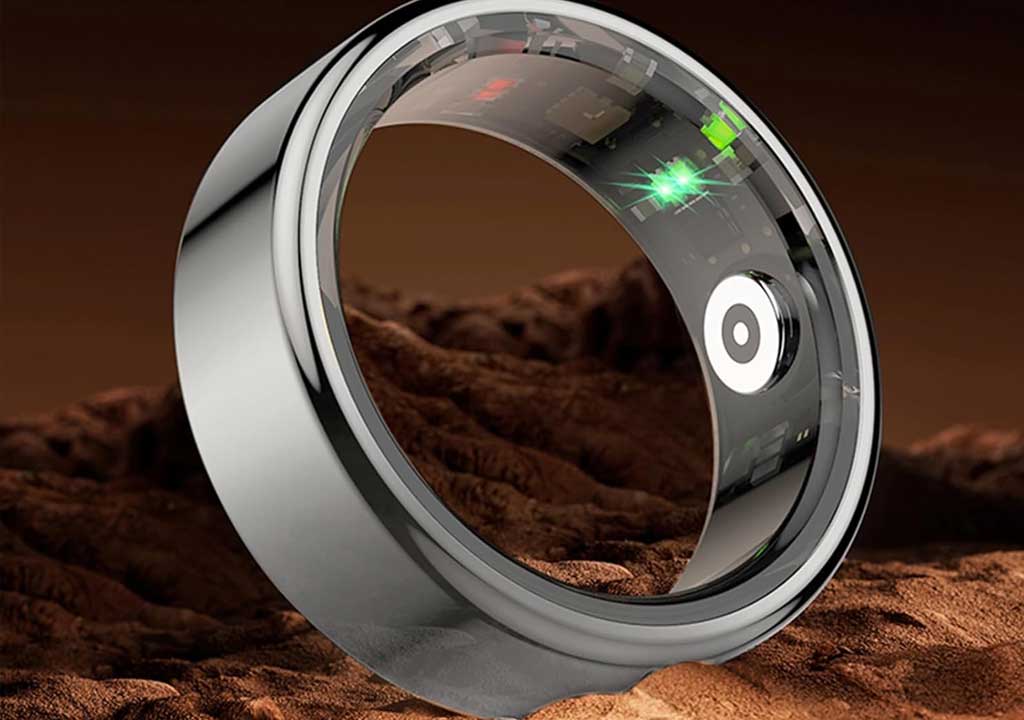
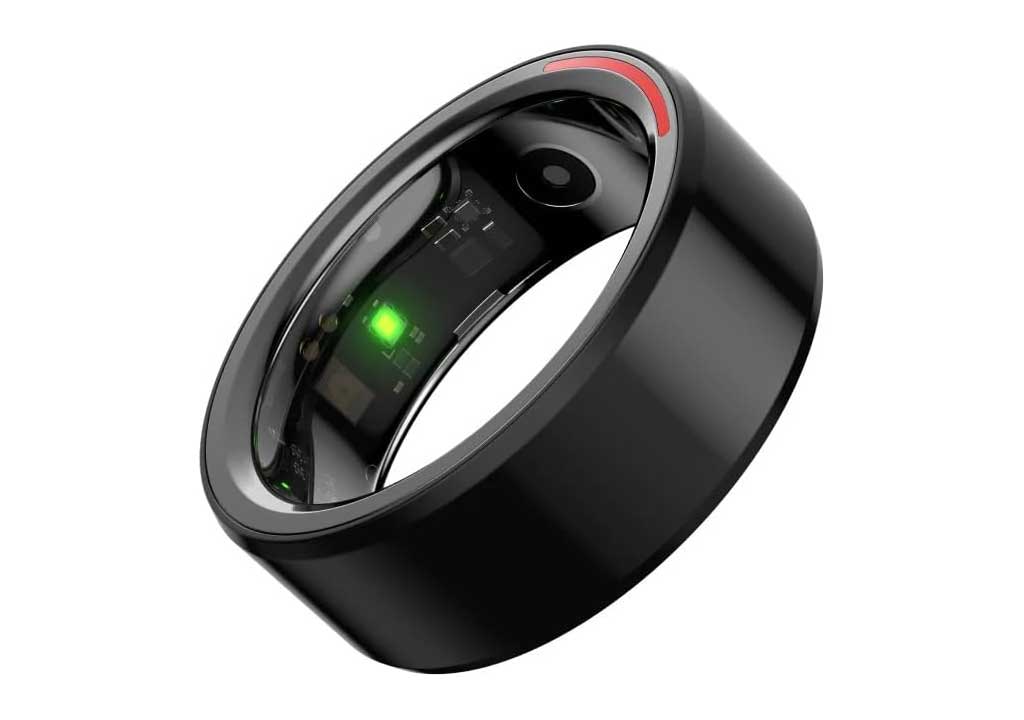
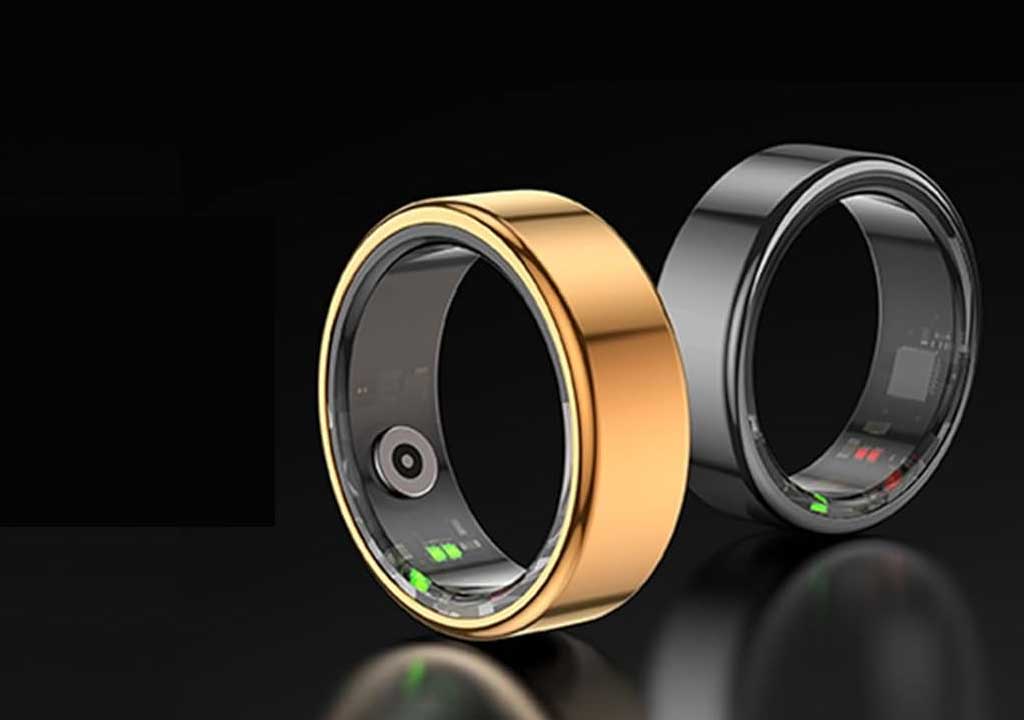
Smart rings are wearables designed to be worn on a finger rather than a wrist or clip-on. They blend form and function in a way that makes them less obtrusive than many other devices: they’re lightweight, often water-resistant, and easy to wear with most outfits. Inside, they house a suite of sensors (heart rate, skin temperature, movement, sometimes HRV) and an on-ring microcontroller that can communicate with your phone or computer. The real magic, though, is in the way they manage information flow: subtle haptic taps, gentle LED indications, and context-aware software that helps you decide when to engage or disengage with your devices.
Because the ring sits so close to your body’s signals—pulse, respiration, or subtle changes in skin conductance—it can be calibrated to reflect your internal state and your chosen focus routines. This intimate, non-intrusive design makes it easier to cue you toward a task or away from a distraction without pulling your attention into a bright screen or loud notification banner.
How Smart Rings Can Boost Concentration
Concentration isn’t simply a matter of willpower; it’s a system problem. You need reliable cues, predictable rhythms, and a signaling environment that respects your cognitive budget. Smart rings approach this problem on several fronts.
First, they offer discreet communication. Instead of a loud alert, you feel a small vibration or see a minimal LED pulse. It’s enough to say, “Pause what you’re doing and check this later,” without breaking your current line of thought. This is particularly valuable for people who work in quiet offices, libraries, or shared spaces where pulling out a phone is a social disruption.
Second, they enable intelligent interruption management. With configurable focus modes, you can specify which apps are allowed to push notifications during a working block, and which should be silenced. The ring translates those rules into tactile or visual cues, so you’re not forced to glance at your phone to know whether something matters. As your focus time accumulates, the ring can even learn patterns—like which types of notifications tend to derail you—and adjust its cues accordingly.
Third, the ring supports improvisation-friendly routines. You can design rituals around your work, such as a “deep work” window triggered by a specific cue from the ring. The routine becomes a cue loop: put on the ring, start the focus timer, receive a cue to begin, and at the end cue a gentle signal to wrap up. The ritual helps shift your brain into a mode where sustained attention is the default, making it easier to resist the pull of ambient distractions.
Fourth, smart rings can augment meta-cognition by tracking focus-related data. They might summarize the number of focus sessions per day, the average length of uninterrupted work, or how long you went without checking your phone after a cue. This feedback helps you adjust your routines and fine-tune your notification rules. Of course, data privacy and transparency are essential; you should know what the ring collects and how it’s used. When used thoughtfully, the data becomes an ally in building better concentration habits rather than a surveillance burden.
Key Features to Look For
- Discreet notification controls: the ability to filter or herd notifications into a manageable set that the ring can cue you about, rather than flooding you with every ping.
- Versatile haptic feedback: customizable vibration patterns and intensity so you can distinguish between different kinds of alerts without looking at your phone.
- Smart do-not-disturb (DND) modes: automatic or scheduled suppression of non-critical alerts during focus blocks.
- Long battery life: a ring should survive a full day, preferably multiple days, to avoid mid-day charging that breaks your workflow.
- Comfortable, durable design: a comfortable fit that you can wear all day without distraction, with materials and sizing that suit your lifestyle.
- Quality sensors and smart data: reliable heart-rate, HRV, and movement data that support focus insights without being a privacy burden.
- Software ecosystem and integrations: compatibility with your phone’s OS, and sensible integrations with your calendar and task apps.
- Privacy and security: clear data handling policies, local processing options, and robust permissions controls.
When evaluating features, think about your own routines. If you work in a high-noise environment, a ring with highly precise haptic cues and a quiet, non-intrusive vibrational profile might be more helpful than bright LEDs. If you collaborate heavily with teammates, a rule-based system that stops non-urgent notifications during critical meetings could be invaluable. The best choice is the one that aligns with how you actually work, not just what sounds impressive on paper.
Implementation: From Idea to Habit
Turning the concept of “ditch notifications” into a practical habit rests on a few core steps. It’s not only about owning a smart ring; it’s about designing a signaling system that respects your cognitive bandwidth and your life’s rhythms. Here’s a pragmatic approach to implement a notification-diet with a smart ring.
1) Audit your current interruptions. For a week, track what interrupts you and when. Note which notifications are truly urgent, which are merely interesting, and which are routine noise. This audit gives you a baseline so you can tailor your ring’s rules to your actual needs.
2) Define your focus windows. Decide when you want to work in focused blocks. A conventional pattern is a 50–90 minute work sprint followed by a 5–15 minute break. Your ring’s DND settings should reflect these windows, triggering quiet times during deep work and allowing essential cues to surface only at planned moments.
3) Map cues to actions. Decide what cues mean for you. A subtle tap might indicate, “This task is locked in—stay with it,” while a longer pulse could signal, “Take a short break and reset.” The language you give your cues matters because your brain will start to associate the cue with the intended behavior, reinforcing the habit.
4) Build a ring-based ritual. Put on the ring at the same time each day and tie its use to a routine (e.g., “start work” by a ring cue, “end work” by a closing cue). Rituals can deepen the sense of agency and reduce the friction of starting boring or challenging tasks.
5) Batch notifications, not bans. You don’t need to silence every message forever. Instead, configure the ring to collect non-urgent alerts, deliver them in a dedicated window (e.g., during a 15-minute “check-in” period), and surface only what’s essential during your focus blocks. This reduces the cognitive cost of constant decision-making about whether to engage.
6) Review and adjust. Regularly revisit your focus blocks, cue patterns, and notification rules. If you’re consistently distracted by a particular source, change its priority or timing. If a cue feels aspirational but rarely helps, rework its meaning or remove it. The system should evolve with you.
7) Guard against over-automation. The ring is a tool, not a tyrant. Use it in service of your work, not as a constant autopilot. If you find it’s becoming a distraction, scale back or disable a feature. The goal is sustainable focus, not a perfect algorithm.
Practical Use Cases
Different domains benefit from a distraction-management approach that’s anchored by a smart ring. Here are a few scenarios that illustrate how ditching constant notifications can practically translate into better concentration.
In the workplace, especially in knowledge-based roles, focus is a scarce resource. Writers, researchers, engineers, and analysts often perform best in uninterrupted blocks. A ring can help you preserve those blocks by filtering out non-urgent messages, nudging you when it’s time to switch tasks, and reminding you to return to a task after a break. The result is fewer context switches and more sustained thought.
In education or academic settings, students juggling lectures, readings, and problem sets can benefit from a clearer signal environment. A ring can help them resist the impulse to check social apps during a study session, or it can time-group study blocks and provide cues for collaborative work so the group remains aligned. Over time, this fosters deeper engagement with material and better retention.
Creative professions—design, coding, music, or research—often require long, uninterrupted periods of concentration. The right ring reduces the pressure to monitor every notification, enabling a flow state where ideas can emerge more fully. The ring’s cues become your “permission to stay in the zone” until you decide you’ve earned a break.
Even routine tasks can benefit. If you’re managing multiple projects across teams, the ring can help you triage by category, presenting only the most urgent items in a focus window and guiding you through a daily planning ritual that keeps your day coherent rather than chaotic.
Potential Drawbacks and How to Mitigate Them
As with any technology, smart rings are not a cure-all. They come with potential drawbacks that you should consider before adopting them as part of a concentration strategy.
First, there is a cost factor. Quality rings can be expensive, and ongoing subscription fees for premium software features may apply. Weigh the price against the potential productivity gains and your tolerance for reliance on a gadget for focus.
Second, there’s the risk of over-reliance. If your focus depends on the ring’s prompts, you may become less able to self-regulate your attention without it. The aim should be to use the ring as a crutch that gradually strengthens your internal ability to sustain attention, not a crutch that makes you dependent on constant cues.
Third, there are privacy and data concerns. A ring collects intimate data about your physiology and behavior. Always review the privacy policy, understand what data is collected, how it’s stored, who can access it, and whether data is used to train algorithms or sold to third parties. Prefer devices that offer local processing options, clear data controls, and transparent opt-outs.
Fourth, not all rings are equally comfortable or practical for all hands. Some people find the ring too tight, too loose, or uncomfortable to wear for long periods. Comfort is not trivial; it affects whether you’ll actually use the device. Pick a size and material you can wear without distraction.
Fifth, the effectiveness of rings depends on a thoughtful setup. If you simply wear the ring without configuring rules and rituals, you won’t realize the potential concentration benefits. Treat the ring as a part of a broader productivity system—calibrated notifications, scheduled focus, and periodic reflection.
Privacy and Ethics
With rings that collect data about your physiology and activity, privacy isn’t an afterthought but a core design concern. Here are some ethical best practices and questions to guide your decision:
- Ask: What data is collected, and why?
- Ask: Is data stored locally or in the cloud? If in the cloud, where is it stored and who has access?
- Ask: Can you opt out of data collection beyond what’s necessary for basic functionality?
- Ask: What happens if you disconnect the ring? Do features degrade gracefully?
- Ask: Are there transparent, user-friendly controls to delete data or export it?
Ethical use also means being mindful of how the ring affects others. For example, using highly sensitive haptic cues in a shared workspace could be noisy or disruptive if not configured to be subtle. When adopting any device that shapes your attention, you’re choosing a responsibility: to use it in ways that respect your own needs and the people around you.
Choosing the Right Ring for You
There isn’t a one-size-fits-all best ring. The right choice depends on your priorities, lifestyle, and budget. Here are practical criteria to guide your decision.
1) Comfort and fit. A ring has to be worn, often all day. Look for adjustable sizes, comfortable materials (titanium, ceramic, hypoallergenic metals), and a shape that doesn’t irritate your skin. If possible, try before you buy.
2) Battery life. If you’re aiming for minimal charging interruptions, pick a ring with at least a full day of battery life and easy magnetic or wireless charging. Some models promise multiple days, which is a strong plus.
3) Notification controls. Check how granular the notification filtering is. Can you globally silence, or is it necessary to tune app-by-app? Look for intelligent defaults and the ability to customize patterns for different tasks.
4) Haptics and cues. The meaning of cues should be easy to remember and distinguish. Some rings offer multiple vibration patterns, colors, or LED pulses. Make sure the pattern language makes sense to you and can be memorized quickly.
5) Sensor suite and health data. If you care about correlations between focus and physiology (like HRV or sleep patterns), ensure the ring’s sensors provide reliable, privacy-conscious data and that the app presents it in a useful way.
6) Software ecosystem. A strong companion app that synchronizes with your calendar, task manager, and email can dramatically improve usefulness. Also consider future-proofing: does the company actively update the software and respond to user feedback?
7) Privacy and security. Look for data handling transparency, local processing options, and straightforward controls for data deletion and export.
8) Durability and water resistance. If you commute or exercise, you’ll want a ring that stands up to daily wear and sweat.
Myths vs Reality
There are a few common myths about wearables and focus that are worth clearing up.
Myth 1: A ring will magically make me productive. Reality: The ring is a tool that can reduce interruptions and cue productive rhythms, but sustained focus still depends on your commitment to a routine, a conducive environment, and clear goals.
Myth 2: If it’s not silent, I won’t use it. Reality: The best cues are subtle and predictable. When designed well, they reduce cognitive load rather than add it. If you find a particular cue annoying, you can reprogram or replace it.
Myth 3: Focus equals no notifications. Reality: Focus is about intelligent signaling. Some alerts matter; most do not in a given moment. The ring helps you filter in a structured way so that when you do check your device, you actually have the bandwidth to decide what to do next.
Myth 4: Wearing a ring is intrusive. Reality: For many people, a ring is less intrusive than a buzzing phone or a screen that blinds with a constant stream of information. When used thoughtfully, it becomes a quiet companion rather than a loud reminder of every incoming message.
FAQs
Q: Will a ring eliminate notifications altogether?
A: No. The goal is to manage and prioritize notifications so they support your focus rather than derail it. You can design rules that allow only critical updates during deep work, with everything else batched for later review.
Q: Can the ring help with sleep and recovery?
A: Some smart rings include sleep tracking and circadian rhythm insights. While that’s not the primary focus of boosting daytime concentration, better sleep often translates to better daytime focus and resilience to interruptions.
Q: How private is the data collected by a smart ring?
A: Privacy varies by device. Look for locally processed data when possible, strong encryption, and transparent privacy policies. Always review app permissions and consider whether you’re comfortable with the data being shared beyond the ring’s ecosystem.
Q: How soon can I expect results?
A: It depends on your routines. Some people notice a reduction in interruptions within a couple of weeks, while others may take longer to establish a stable focus ritual. Consistency is the most important factor.
Conclusion
The quest for better concentration in a world of constant connection is not about abandoning technology but about reengineering how we receive signals from it. Smart rings offer a compelling, unobtrusive path to fewer interruptions and more intentional work. By filtering noise, delivering discreet cues, and supporting consistent work rituals, they can help you reclaim your focus, one mindful vibration at a time.
If you’re curious about ditching notifications, consider a practical test: audit your interruptions for a week, set up a ring with a focused routine, and measure how your work blocks feel at the end of the day. The goal is not perfection but a sustainable, human-centered approach to attention. With a well-configured ring, you may discover that deep work isn’t a rare event; it becomes a predictable, repeatable practice you can build into your daily life.
In a world that constantly signals, choosing where to place your attention is one of the most powerful decisions you can make. A smart ring won’t do the thinking for you, but it can give your brain the room it needs to think more clearly. Ditch the constant pings, embrace focus-friendly cues, and let the ring be a guide—not a boss—in your pursuit of better concentration. The future of work and learning may well hinge on how calmly we respond to the noise, not how loudly we shout to be heard.
LIKED THIS ARTICLE? SHARE IT: